
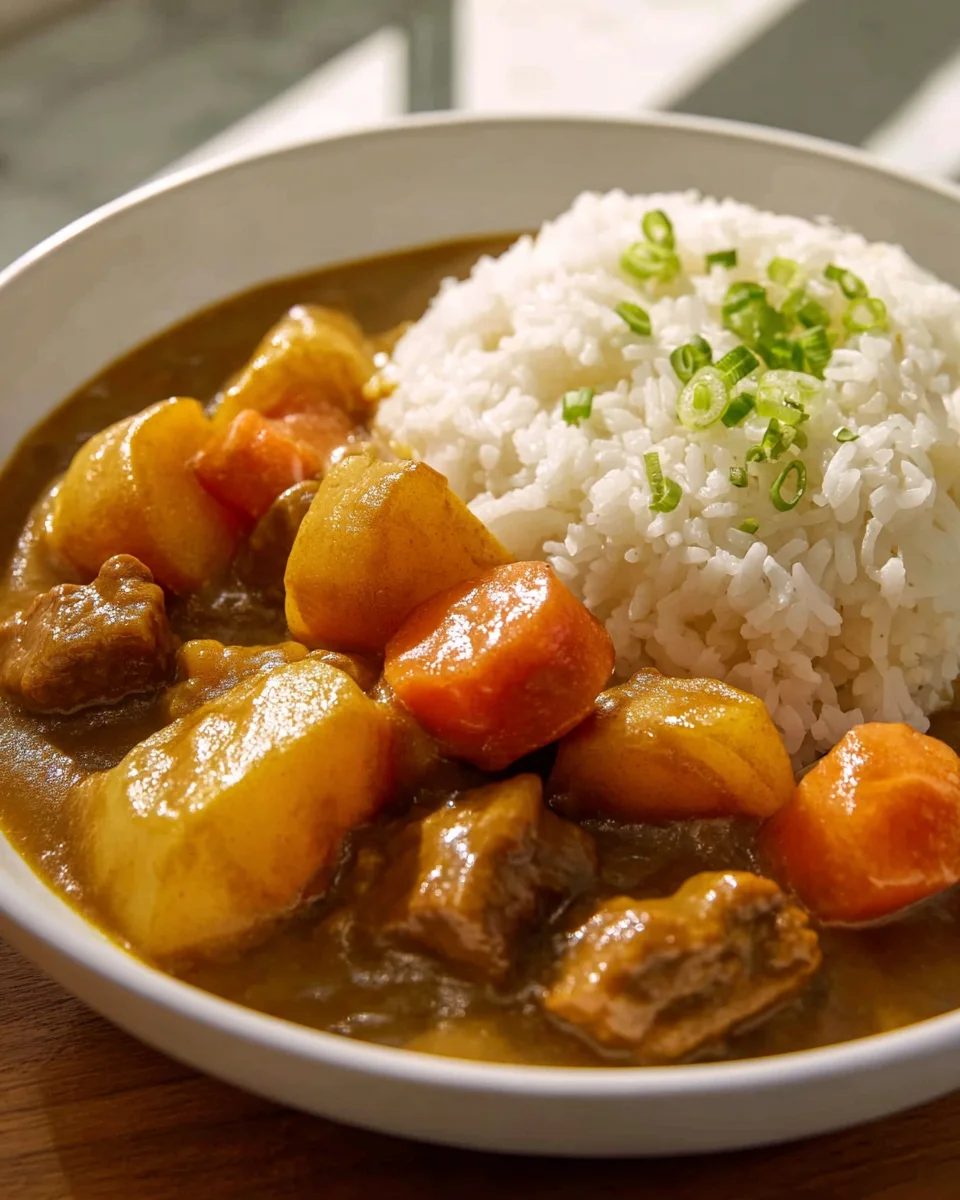
Japanese Curry On Rice is more than just a meal; it’s a warm, savory hug in a bowl, promising pure comfort with every spoonful. If you’ve ever craved a dish that satisfies your soul as much as your stomach, then you’re in the right place. This iconic dish, while inspired by Indian curries introduced to Japan in the Meiji era, has evolved into something uniquely Japanese—a rich, flavorful, and slightly sweet creation that stands apart from its predecessors. It’s become a beloved national dish, ingrained in the hearts of families across the country, often a nostalgic reminder of home cooking.
People absolutely adore this dish for countless reasons. Its distinctive taste—a beautiful balance of savory, umami, and a subtle sweetness often derived from apples or honey—is incredibly appealing. The creamy, thick sauce perfectly coats tender pieces of meat and hearty vegetables like carrots and potatoes, all served over fluffy, sticky rice. It’s incredibly satisfying, relatively simple to prepare, and wonderfully versatile, making it the perfect weeknight dinner or a special treat for friends. There’s a reason why Japanese Curry On Rice has become a staple for so many; it’s simply irresistible and wonderfully adaptable to personal tastes.
Ingredients:
- For the Protein (Choose One):
- 1.5 lbs (about 680g) boneless, skinless chicken thighs or breast, cut into 1-inch cubes
- OR 1.5 lbs (about 680g) beef stew meat (chuck roast), cut into 1-inch cubes
- OR 1 block (14 oz / 400g) firm or extra-firm tofu, pressed and cut into 1-inch cubes
- For the Vegetables:
- 2 large yellow onions, peeled and chopped into 1/2-inch pieces
- 4 medium carrots, peeled and cut into 1/2-inch thick rounds or half-moons
- 4 medium russet potatoes, peeled and cut into 1-inch cubes
- 2-3 cloves garlic, minced
- 1 inch fresh ginger, grated (optional, but highly recommended for depth)
- For the Curry Roux:
- 1 box (approx. 7 oz / 200g) Japanese curry roux blocks (e.g., S&B Golden Curry, Vermont Curry, Kokumaro) – choose your preferred spice level (mild, medium hot, hot)
- For the Liquid:
- 4-5 cups (960ml – 1.2 liters) hot water, chicken broth, or beef broth (adjust based on desired thickness)
- For Cooking:
- 2 tablespoons vegetable oil or other neutral cooking oil
- For Serving (Japanese Curry On Rice):
- 3-4 cups uncooked short-grain Japanese rice, cooked according to package directions (yields about 6-8 cups cooked rice)
- Optional Garnishes and Flavor Enhancers:
- Fukujinzuke (pickled daikon, eggplant, lotus root, cucumber)
- Red pickled ginger (beni shoga)
- Toasted sesame seeds
- Chopped fresh scallions or parsley
- A dash of Worcestershire sauce (for extra umami)
- A spoonful of honey or grated apple (to mellow the spice and add sweetness)
Prep Work and Chopping: The Foundation of Delicious Japanese Curry On Rice
Before we even think about turning on the stove, the crucial first step for any great recipe, especially for something as comforting as Japanese Curry On Rice, is meticulous preparation. This phase, often called mise en place, ensures a smooth and enjoyable cooking experience. Trust me, having everything prepped and ready will make the rest of the process flow effortlessly.
- Pre-Press Tofu (If Using): If you’ve opted for tofu as your protein, this is a critical first step. Tofu contains a lot of water, and pressing it removes excess moisture, allowing it to better absorb flavors and achieve a firmer texture. Place the block of tofu between several layers of paper towels or a clean kitchen towel. Put a heavy object (like a cast-iron pan or a few cans) on top and let it press for at least 30 minutes, or even an hour. This small effort makes a big difference to the final texture of your curry.
- Dice the Onions: Peel both large yellow onions. Cut them in half lengthwise, then place them cut-side down on your cutting board. Make parallel vertical cuts, then horizontal cuts, to create uniform 1/2-inch dice. Uniformity is key here because it ensures that all onion pieces cook evenly, becoming soft and translucent at the same time, which contributes to the overall texture of the curry.
- Prepare the Carrots: Peel the carrots thoroughly. You can cut them into 1/2-inch thick rounds for a classic look, or if you prefer them smaller or want them to cook a bit faster, cut them into half-moon shapes by slicing the rounds in half. Again, strive for consistency in size.
- Cube the Potatoes: Peel the russet potatoes. Cut them into approximately 1-inch cubes. Russet potatoes are excellent for curry because they break down slightly during cooking, thickening the sauce beautifully, while still retaining their shape. If your potato pieces are too small, they might disintegrate entirely, turning your curry into a mash, which isn’t quite the traditional texture we’re aiming for with Japanese Curry On Rice.
- Mince Garlic and Grate Ginger: Peel the garlic cloves and mince them finely. For the ginger (if using), peel a one-inch piece and grate it using a microplane or a fine grater. Fresh ginger adds a wonderful aromatic warmth and a subtle zing that truly elevates the flavor profile of the curry.
- Prepare Your Protein:
- Chicken: If using chicken thighs or breasts, cut them into 1-inch cubes. Remove any excess fat or gristle from the thighs, and ensure breasts are uniform in size for even cooking.
- Beef: If using beef stew meat, ensure it’s cut into 1-inch cubes. If you bought a larger piece of chuck roast, trim any large pieces of fat and then cube it yourself. Beef often benefits from a slightly longer cooking time, which will be accounted for in later steps.
- Tofu: Once pressed, cut the tofu block into 1-inch cubes.
- Measure Liquids: Have your hot water, chicken broth, or beef broth ready. Using hot liquid helps maintain the temperature of the pot and reduces the cooking time slightly once added to the hot ingredients.
- Unwrap Curry Roux: Open your box of Japanese curry roux blocks and have them ready. You’ll likely use most or all of a standard 7-ounce box for this amount of ingredients, but you can always adjust slightly based on the desired richness and thickness.
Sautéing the Aromatics and Vegetables: Building the Flavor Base
This is where the magic truly begins to happen, as we start layering the flavors that will define your incredible Japanese Curry On Rice. The sautéing process develops deep, rich notes and tenderizes the vegetables, setting the stage for the curry sauce.
- Heat the Oil: Place a large, heavy-bottomed pot or Dutch oven over medium heat. Add 2 tablespoons of vegetable oil. Allow the oil to heat up until it shimmers slightly. You want it hot enough to sauté, but not smoking.
- Sauté the Onions: Add the chopped onions to the hot oil. Cook, stirring frequently, for 8-10 minutes, or until they become very soft and translucent. Do not rush this step! Allowing the onions to cook down slowly and caramelize slightly (without browning too much) will create a sweet, savory base that is absolutely essential for the depth of flavor in your Japanese curry. This is where a lot of the umami starts to develop.
- Add Garlic and Ginger: Once the onions are soft, add the minced garlic and grated ginger (if using) to the pot. Sauté for another 1-2 minutes, stirring constantly, until fragrant. Be careful not to burn the garlic, as it can turn bitter very quickly. The aroma filling your kitchen right now is the first promise of the deliciousness to come!
- Incorporate Carrots: Add the chopped carrots to the pot. Continue to sauté for another 5-7 minutes, stirring occasionally. This helps to soften the carrots slightly and allows them to absorb some of the aromatic flavors from the onions, garlic, and ginger.
Cooking the Protein and Simmering the Curry: The Heart of Your Japanese Curry On Rice
Now we’re moving on to cooking our chosen protein and bringing together all the elements with the rich Japanese curry roux. This phase is all about developing that signature thick, comforting sauce that makes Japanese Curry On Rice so beloved.
- Brown the Protein (If Using Chicken or Beef):
- For Chicken or Beef: Push the vegetables to one side of the pot, creating some space. Add your cubed chicken or beef to the open space. Brown the meat on all sides, stirring occasionally, for about 5-8 minutes. The goal here isn’t to cook the meat through, but to develop a nice browned crust, which adds a fantastic layer of flavor through the Maillard reaction. Once browned, stir the meat into the vegetables.
- For Tofu: If using tofu, you can either add the pressed and cubed tofu directly to the pot with the vegetables, or for a crispier texture, you can pan-fry it separately in a little oil until golden brown on all sides, then add it to the pot later. For simplicity and to integrate flavors, adding it directly now works well, allowing it to soak up the aromatics as it heats through.
- Add Potatoes and Liquid: Add the cubed potatoes to the pot. Pour in 4 cups of hot water or broth. Stir everything well to combine. Make sure the liquid mostly covers the ingredients. If your pot looks a little dry or your ingredients are barely submerged, you can add another cup of hot liquid.
- Bring to a Simmer: Bring the mixture to a gentle boil, then reduce the heat to low. Cover the pot and let it simmer for 15-20 minutes, or until the potatoes and carrots are tender. You should be able to easily pierce a potato cube with a fork. For beef curry, extend this simmering time to 45-60 minutes, or even longer, until the beef is melt-in-your-mouth tender. The longer simmer for beef allows the connective tissues to break down, resulting in a much more succulent texture.
- Prepare the Curry Roux Blocks: While the vegetables and protein are simmering, break apart the Japanese curry roux blocks into smaller pieces. This will help them dissolve more easily in the hot liquid.
- Dissolve the Roux: Once the vegetables and protein are tender, turn off the heat. This is an important step to prevent the roux from clumping. Add the broken curry roux blocks to the pot, distributing them evenly. Stir continuously with a wooden spoon or whisk until the roux blocks are completely dissolved and the sauce begins to thicken. It’s crucial to stir until there are no visible lumps. The sauce will gradually transform from a thin broth into the rich, glossy curry sauce you expect for Japanese Curry On Rice.
- Gentle Simmer and Thicken: Turn the heat back on to low. Continue to simmer the curry, uncovered, for another 5-10 minutes, stirring occasionally to prevent sticking, until the sauce reaches your desired thickness. It should be thick enough to coat the back of a spoon. Taste and adjust seasonings if necessary. This is also the time to add any optional flavor enhancers like a dash of Worcestershire sauce for extra depth, or a spoonful of honey/grated apple if you want to balance the spiciness and add a hint of sweetness.
- Final Check: Ensure the protein is cooked through and tender, and the vegetables are soft. The sauce should be smooth and luscious. Your Japanese curry is now ready!
Preparing the Rice: The Perfect Accompaniment for Japanese Curry On Rice
No Japanese Curry On Rice is complete without perfectly cooked, fluffy, short-grain Japanese rice. The rice isn’t just a side; it’s an integral component, soaking up all that delicious curry sauce.
- Rinse the Rice: Place your 3-4 cups of uncooked short-grain Japanese rice in a large bowl. Fill the bowl with cold water and gently agitate the rice with your hand. The water will become cloudy due to excess starch. Carefully drain the water, being careful not to lose any rice. Repeat this rinsing process 3-5 times, or until the water runs mostly clear. This step is crucial for achieving fluffy, separate grains of rice rather than a sticky, gummy texture.
- Cook the Rice:
- Rice Cooker Method: Transfer the rinsed rice to your rice cooker pot. Add the appropriate amount of water according to your rice cooker’s instructions (typically a 1:1 ratio or slightly less for Japanese short-grain rice, e.g., 3 cups rice to 3 cups water). Close the lid and start the cooking cycle. Once cooked, let the rice rest in the cooker on the “keep warm” setting for at least 10-15 minutes before opening. This allows the steam to redistribute, resulting in perfectly fluffy rice.
- Stovetop Method: Transfer the rinsed rice to a heavy-bottomed pot with a tight-fitting lid. Add the appropriate amount of water (e.g., 3 cups rice to 3.5-4 cups water). Bring the water to a boil over medium-high heat. Once boiling, immediately reduce the heat to the lowest setting, cover the pot tightly, and simmer for 15-20 minutes, or until all the water has been absorbed. Do not lift the lid during this time! Once cooked, remove the pot from the heat and let it rest, still covered, for another 10-15 minutes. This steaming period is just as important as the cooking itself.
- Fluff the Rice: After the resting period, gently fluff the cooked rice with a rice paddle or fork. This separates the grains and releases any remaining steam.
Finishing Touches and Serving Your Japanese Curry On Rice
You’ve done all the hard work, and now comes the most rewarding part: assembling and enjoying your homemade Japanese Curry On Rice. This is where you can add your personal flair with garnishes.
- Serve the Rice: Spoon a generous portion of fluffy, freshly cooked rice onto a plate or into a deep bowl. Shape it nicely, perhaps into an oval or mound, along one side of the plate.
- Ladle the Curry: Carefully ladle the hot, rich Japanese curry sauce alongside or partially over the rice. You want a good balance – enough curry to enjoy with every bite of rice, but not so much that the rice is completely submerged from the start. The vibrant color of the curry contrasting with the white rice is always a pleasing sight.
- Garnish (Optional, but Recommended): This is your chance to add texture and a pop of color and flavor.
- Serve with a side of traditional Japanese pickles like Fukujinzuke or a sprinkle of red pickled ginger (beni shoga). Their sweet and tangy crunch provides a wonderful contrast to the savory, rich curry.
- A sprinkle of toasted sesame seeds adds a subtle nutty flavor and visual appeal.
- Chopped fresh scallions or parsley can brighten up the dish with their fresh green color and mild herbaceous notes.
- Enjoy Immediately: Japanese curry is best enjoyed hot and fresh. Dive into your delicious, comforting bowl of Japanese Curry On Rice! The flavors will meld beautifully, offering a hearty and satisfying meal. Leftovers are also fantastic, as the flavors often deepen overnight, making it an excellent meal prep option. Simply store any leftover curry and rice separately in airtight containers in the refrigerator for up to 3-4 days.
Tips for the Perfect Japanese Curry On Rice:
- Don’t Skimp on Simmering: Especially for beef, slow simmering is what makes the meat incredibly tender and allows flavors to fully develop.
- Taste and Adjust: Always taste your curry before serving. You might find a small pinch of sugar or a tiny splash of soy sauce can balance the flavors perfectly.
- Experiment with Roux Brands: Different brands of Japanese curry roux have slightly different flavor profiles and spice levels. Try a few to find your favorite!
- Add More Vegetables: Feel free to add other vegetables like bell peppers, green beans, or mushrooms during the last 10-15 minutes of simmering.
- Make it Your Own: While this recipe provides a solid foundation, don’t hesitate to adjust the ingredient quantities or add unique touches to make this Japanese Curry On Rice truly your own signature dish.

Conclusion:
And there you have it, my friends! We’ve reached the end of our culinary journey, and I genuinely hope you’re feeling inspired, perhaps even a little hungry, to whip up this incredible dish in your own kitchen. This isn’t just any meal; this is a truly heartwarming, deeply satisfying experience waiting to happen. The magic of a perfectly prepared Japanese Curry On Rice lies in its beautiful balance of flavors – that rich, savory, slightly sweet, and wonderfully umami taste that makes every spoonful a pure delight. It’s the kind of comfort food that wraps around you like a warm blanket on a chilly evening, capable of turning an ordinary day into something special. I’ve poured my heart into sharing all the tips and tricks to make sure your first (or fiftieth!) attempt is a resounding success.
What makes this particular rendition a must-try isn’t just its delectable taste, but also its inherent simplicity and impressive versatility. You don’t need to be a Michelin-starred chef to master this; the steps are straightforward, and the ingredients are accessible. Yet, the outcome is always gourmet-level deliciousness. It’s the perfect dish for a cozy family dinner, a casual get-together with friends, or even a comforting treat for yourself after a long week. The aromas alone as it simmers on the stove are enough to get anyone’s mouth watering, promising a feast for the senses.
Elevate Your Japanese Curry On Rice Experience
Now, let’s talk about taking your dining experience to the next level. While the foundational recipe is utterly fantastic on its own, one of the things I adore most about this dish is how easily it adapts to your personal preferences and whatever you have on hand. For serving suggestions, consider pairing your generous helping of curry with a crispy piece of chicken katsu (a personal favorite!), golden-fried shrimp, or even tender slices of beef. If you’re leaning towards a vegetarian option, perfectly pan-fried tofu or a medley of roasted vegetables like broccoli florets, bell peppers, or even substantial chunks of sweet potato make for excellent additions. Don’t forget the classic combination of fluffy, short-grain white rice – it’s the ideal canvas for soaking up every last drop of that incredible sauce.
Beyond the main protein or veggie, there are so many delightful toppings and variations to explore. A sprinkle of vibrant fukujinzuke (Japanese pickled daikon and vegetables) or a dollop of gari (pickled ginger) offers a wonderful tangy contrast that cuts through the richness of the curry beautifully. For an extra layer of indulgence, why not crown your plate with a perfectly fried egg, its runny yolk mingling with the savory sauce? A dash of chili powder or a swirl of Sriracha can amp up the heat for those who crave a fiery kick, while a garnish of fresh chopped scallions or crispy fried shallots adds a welcome textual crunch and aromatic freshness. Experiment with different rice types too – perhaps a nutty brown rice for added fiber, or even a sticky sushi rice for a different mouthfeel. The possibilities are truly endless, and each variation offers a unique culinary adventure.
Your Culinary Adventure Awaits!
So, what are you waiting for? I wholeheartedly encourage you to roll up your sleeves, gather your ingredients, and embark on this delightful cooking journey. This recipe for Japanese Curry On Rice is more than just instructions; it’s an invitation to create something truly delicious and memorable in your own kitchen. I promise you, the effort will be richly rewarded with a meal that will leave you feeling deeply satisfied and incredibly proud of your culinary prowess.
Once you’ve savored every last bite, I would absolutely love to hear from you! Please don’t hesitate to share your experiences, your unique twists, and even photos of your glorious creations. Did you add a secret ingredient? Did you discover a new favorite topping? Your feedback and shared joy are what make this community so vibrant and inspiring. Tag me, comment below, or just shout it from the rooftops – I’m excited to see what you come up with. Thank you for joining me on this delicious adventure, and happy cooking!
Delicious Japanese Beef Curry Rice: Easy Weeknight Meal
Experience the ultimate comfort food with this easy Japanese Beef Curry Rice. Featuring tender beef, hearty vegetables, and a rich, savory, slightly sweet curry sauce served over fluffy rice, it’s a beloved national dish perfect for any meal.
Ingredients
Instructions
Important Information
Nutrition Facts (Per Serving)
It is important to consider this information as approximate and not to use it as definitive health advice.
Allergy Information
Please check ingredients for potential allergens and consult a health professional if in doubt.
Leave a Comment