
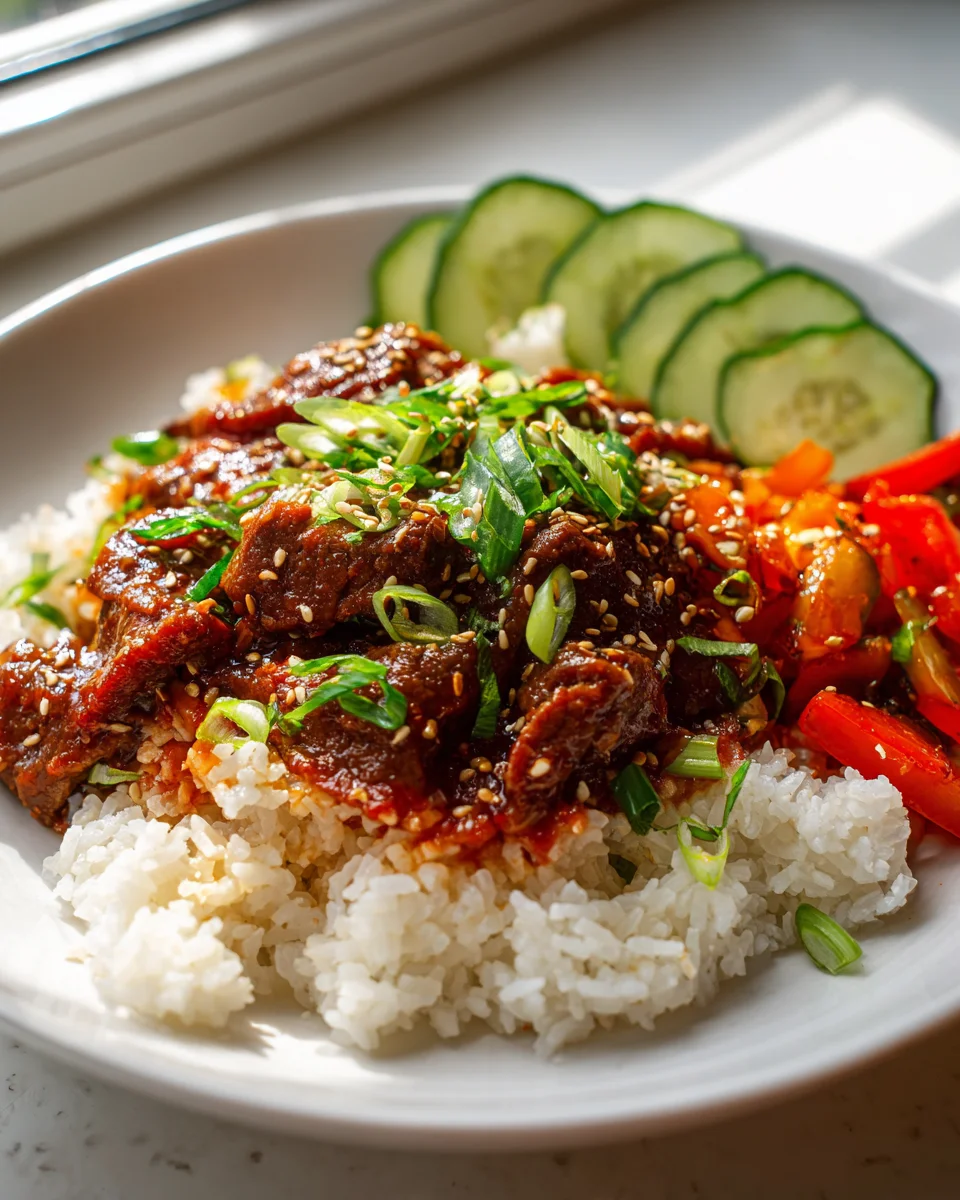
One rainy afternoon, I found myself in a tiny Korean restaurant tucked away in a bustling part of the city. The aroma of sizzling beef wafted through the air as I entered, instantly warming my heart. I settled into a cozy corner, and when my order of Dwaeji Bulgogi arrived, I was captivated. The vibrant colors of the marinated beef, glistening with a spicy-sweet glaze, danced alongside a bed of fluffy white rice and crisp vegetables. Each bite was a delightful explosion of flavors—savory, spicy, and slightly sweet, all harmonizing beautifully.
This Korean Spicy Beef Rice Bowl has become a beloved recipe in my home, not just for its bold flavors but for the memories it creates. The beef is marinated to perfection in a blend of soy sauce, garlic, and a kick of gochujang, bringing a depth that’s simply irresistible. What makes my version stand out is the addition of fresh veggies, which add a satisfying crunch and a burst of color, making every bowl a feast for the senses.
As I prepare this dish in my kitchen, I can’t help but feel a sense of joy. It’s more than just a meal; it’s a celebration of flavors and the perfect comfort food for any occasion. Let me show you exactly how to make this delightful Korean Spicy Beef Rice Bowl, and together we can create a dish that warms both the belly and the soul.
Why You’ll Love This Recipe
- Ready in under 30 minutes, making it perfect for busy weeknights.
- The combination of gochujang and gochugaru gives the dish a deep, spicy flavor profile with just the right amount of heat.
- Using tender beef creates a melt-in-your-mouth texture that pairs beautifully with the crisp vegetables.
- Budget-friendly ingredients mean you can whip up this delicious meal without breaking the bank.
- One-pan preparation means less cleanup, leaving you more time to enjoy your meal.
Ingredients
- 1 lb (450g) beef (sirloin or flank steak), thinly sliced
- 3 tablespoons gochujang (Korean red chili paste)
- 1 tablespoon gochugaru (Korean red chili flakes)
- 2 tablespoons soy sauce
- 2 tablespoons sugar (brown sugar or white sugar)
- 1 tablespoon sesame oil
- 1 tablespoon rice vinegar
- 4 cloves garlic, minced
- 1-inch piece ginger, grated
- 1 tablespoon sesame seeds
- 1 small onion, thinly sliced
- 1 medium carrot, julienned
- 1 green onion, chopped (for garnish)
- 2 cups cooked white rice (jasmine or short-grain)
- 1 cup napa cabbage or lettuce leaves (optional, for serving)
- Sliced cucumbers or pickled radish (optional, for garnish)
Let’s take a closer look at some of the key ingredients that make this Korean Spicy Beef Rice Bowl (dwaeji Bulgogi Style) truly special. First, the gochujang, a fermented red chili paste, adds depth and umami, balancing sweetness with its spicy kick. When selecting gochujang, look for a brand that has a robust flavor and a good consistency — I often opt for ones made with natural ingredients. As a substitution, you can use sriracha in a pinch, but the flavor will differ slightly.
The other star ingredient is gochugaru, which brings a unique smoky heat. It’s essential for achieving the authentic Korean flavor profile. If you can’t find gochugaru, crushed red pepper flakes can work, although they may lack the same depth of flavor. Finally, sesame oil adds a nutty richness that complements the beef, making sure to choose a high-quality, toasted version for the best results.
Step-by-Step Instructions
- In a large bowl, combine the gochujang, gochugaru, soy sauce, sugar, sesame oil, rice vinegar, minced garlic, and grated ginger. Mix well until you have a smooth marinade. This should take about 2-3 minutes.
- Add the thinly sliced beef to the marinade, ensuring each piece is well-coated. Let it marinate for at least 15 minutes at room temperature. If you’re short on time, even 5 minutes will impart some flavor, but longer is better.
- Heat a large skillet or wok over medium-high heat. Once hot, add the marinated beef, spreading it out evenly. Cook for about 5-7 minutes, stirring occasionally until the beef is browned and cooked through. Look for a nice caramelization on the edges for that delicious flavor.
- Add the thinly sliced onion and julienned carrot to the pan. Stir-fry for an additional 3-4 minutes until the vegetables are tender yet still crisp. Avoid overcooking them; you want a nice contrast in texture.
- Once everything is cooked, remove the skillet from the heat. Sprinkle sesame seeds over the beef and vegetables, and toss to combine.
- To serve, place a generous scoop of cooked white rice in a bowl. Top it with the spicy beef mixture and garnish with chopped green onions. If you’re using napa cabbage or lettuce, you can layer it underneath the beef for added crunch.
- Optionally, add sliced cucumbers or pickled radish on the side for a refreshing contrast. Enjoy immediately while everything is hot!
Pro Tips for the Best Korean Spicy Beef Rice Bowl (dwaeji Bulgogi Style)
- When slicing the beef, aim for thin slices against the grain to ensure tenderness. A slightly frozen piece of beef can make slicing easier.
- Don’t skip the marinating step! This is where the flavors meld and penetrate the meat, ensuring every bite is packed with taste.
- Using a cast-iron skillet can help achieve a better sear on the beef, enhancing the overall flavor. However, make sure not to overcrowd the pan; cook in batches if necessary.
- A common mistake is not letting the marinade rest long enough. Even 15 minutes makes a difference, but if you can, marinate for a few hours or overnight for even more flavor.
- Adjust the spice level by varying the amount of gochugaru. If you prefer a milder dish, reduce it to 1/2 tablespoon; for more heat, feel free to add more!
Variations & Serving Ideas
Consider these delicious variations to personalize your Korean Spicy Beef Rice Bowl: use thinly sliced chicken or tofu for a lighter alternative, or add seasonal vegetables like bell peppers or zucchini for extra color and nutrition. For a fusion twist, try using quinoa instead of rice, or serve it in lettuce wraps for a fun hand-held meal.
As for sides, I highly recommend serving kimchi for its fermented tanginess that pairs well with the spicy beef. A simple cucumber salad can provide a refreshing crunch, and a warm miso soup complements the meal beautifully, adding warmth and depth to your dining experience.
Storage, Make-Ahead & Reheating
This dish can be refrigerated for up to 3 days in an airtight container. It actually tastes better the next day as the flavors continue to meld. If you want to freeze it, make sure to cool the beef mixture completely before transferring it to a freezer-safe container. It can be frozen for up to 3 months. To reheat, simply thaw overnight in the fridge, then warm the beef in a skillet over medium heat for about 5-7 minutes or until heated through.
Frequently Asked Questions
Can I make Korean Spicy Beef Rice Bowl (dwaeji Bulgogi Style) ahead of time?
Yes! In fact, it tastes even better the next day as the flavors have more time to develop. Just store it in the fridge and reheat when ready to enjoy.
What kind of beef works best for this recipe?
For the best flavor and tenderness, use sirloin or flank steak, sliced thinly against the grain. These cuts absorb the marinade well and cook quickly, making them perfect for this dish.
Can I adjust the spice level in this recipe?
Absolutely! You can reduce the amount of gochugaru for a milder flavor or increase it for more heat. Tasting as you go will help you find the right balance for your palate.
Is it possible to make this dish vegetarian or vegan?
Yes! You can substitute the beef with firm tofu or tempeh, and use a plant-based gochujang. Just be sure to follow the same marinating and cooking instructions for great flavor.
What are some good sides to serve with this dish?
Pair this spicy beef rice bowl with kimchi for a tangy crunch, a fresh cucumber salad for balance, or even a warm miso soup for a comforting accompaniment. Each adds a delightful contrast to the rich flavors of the beef.
Final Thoughts
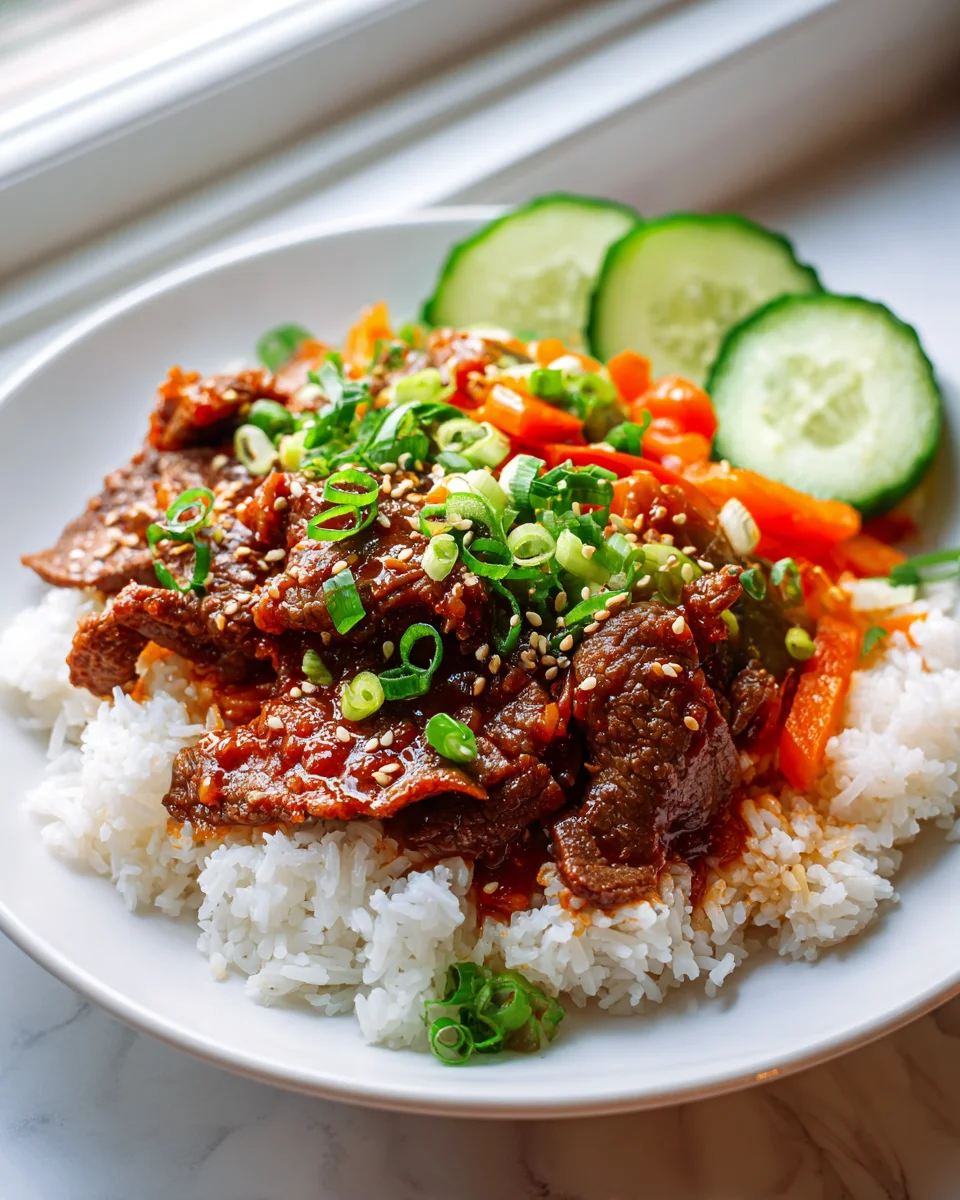
The Korean Spicy Beef Rice Bowl (dwaeji Bulgogi Style) is a delightful fusion of bold flavors and comforting textures, making it an incredibly satisfying meal. The marinated beef, combined with fresh vegetables and a fragrant rice base, creates a harmonious dish that truly excites the palate.
This is the kind of recipe I come back to again and again, especially when I want to impress friends with a homemade taste of Korea or simply treat myself to something special. The balance of spice and sweetness is just irresistible!
I encourage you to give this recipe a try. Don’t hesitate to add your own twist—maybe some extra veggies or a spicy sauce for an additional kick. I’d love to hear about your results and any creative variations you come up with!
Korean Spicy Beef Rice Bowl: Irresistible Dwaeji Bulgogi Style

This Korean Spicy Beef Rice Bowl is a delightful fusion of bold flavors and comforting textures, featuring marinated beef and fresh vegetables over fluffy rice. It’s the perfect comfort food for any occasion, ready in under 30 minutes!
- Prep Time: 15 mins
- Cook Time: 15 mins
- Total Time: 30 minutes
- Yield: 4 servings 1x
- Category: Dinner
- Method: Stir-frying
- Cuisine: Korean
Ingredients
- 1 lb (450g) beef (sirloin or flank steak), thinly sliced
- 3 tablespoons gochujang (Korean red chili paste)
- 1 tablespoon gochugaru (Korean red chili flakes)
- 2 tablespoons soy sauce
- 2 tablespoons sugar (brown sugar or white sugar)
- 1 tablespoon sesame oil
- 1 tablespoon rice vinegar
- 4 cloves garlic, minced
- 1-inch piece ginger, grated
- 1 tablespoon sesame seeds
- 1 small onion, thinly sliced
- 1 medium carrot, julienned
- 1 green onion, chopped (for garnish)
- 2 cups cooked white rice (jasmine or short-grain)
- 1 cup napa cabbage or lettuce leaves (optional, for serving)
- Sliced cucumbers or pickled radish (optional, for garnish)
Instructions
- In a large bowl, combine the gochujang, gochugaru, soy sauce, sugar, sesame oil, rice vinegar, minced garlic, and grated ginger. Mix well until you have a smooth marinade. This should take about 2-3 minutes.
- Add the thinly sliced beef to the marinade, ensuring each piece is well-coated. Let it marinate for at least 15 minutes at room temperature. If you're short on time, even 5 minutes will impart some flavor, but longer is better.
- Heat a large skillet or wok over medium-high heat. Once hot, add the marinated beef, spreading it out evenly. Cook for about 5-7 minutes, stirring occasionally until the beef is browned and cooked through. Look for a nice caramelization on the edges for that delicious flavor.
- Add the thinly sliced onion and julienned carrot to the pan. Stir-fry for an additional 3-4 minutes until the vegetables are tender yet still crisp. Avoid overcooking them; you want a nice contrast in texture.
- Once everything is cooked, remove the skillet from the heat. Sprinkle sesame seeds over the beef and vegetables, and toss to combine.
- To serve, place a generous scoop of cooked white rice in a bowl. Top it with the spicy beef mixture and garnish with chopped green onions. If you're using napa cabbage or lettuce, you can layer it underneath the beef for added crunch.
- Optionally, add sliced cucumbers or pickled radish on the side for a refreshing contrast. Enjoy immediately while everything is hot!
Nutrition
- Serving Size: 1 bowl
- Calories: 450
- Sugar: 10 g
- Sodium: 800 mg
- Fat: 20 g
- Saturated Fat: 5 g
- Unsaturated Fat: 15 g
- Trans Fat: 0 g
- Carbohydrates: 50 g
- Fiber: 3 g
- Protein: 25 g
- Cholesterol: 70 mg
Keywords: When slicing the beef, aim for thin slices against the grain to ensure tenderness. Don't skip the marinating step! Using a cast-iron skillet can help achieve a better sear on the beef. Adjust the spice level by varying the amount of gochugaru.
Leave a Comment